Trichoglossum hirsutum
Scientific name: Trichoglossum hirsutum (Pers.)
Boud.
Derivation of name: Hirsut- means "hairy" in
reference to the velvety hairs present on the
fruitbody.
Synonyms: Geoglossum hirsutum Pers.
Common name(s): Velvety earth tongue; Velvety
black earth tongue.
Phylum: Ascomycota
Order: Geoglossales
Family: Geoglossaceae
Occurrence on wood substrate: Saprobic;
solitary or clustered in soil, well-decayed wood or
among sphagnum mosses.
Dimensions: Dark brown to black fruitbodies are
up to 7.5 cm tall.
Description: Fruitbody consists of club to lance-
shaped, compressed head-like portion supported
by a stalk. Both stalk and head have minute spines
(setae) that are visible with a hand lens. Velvety
hairs are present on the stalk.
Comments: Identification beyond the genus will be
uncertain unless a microscope is used to examine
asci and ascospores. Bessette keys out 6 species
based on such characters. There are also a number
of similar species in the genus Geoglossum but species
in this genus lack the minute spines (setae).
More information at Wikipedia.org:
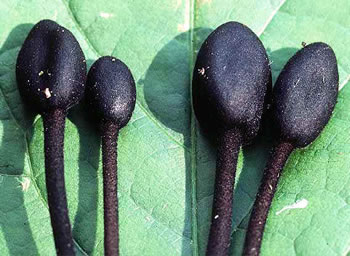
Figure 1. Trichoglossum hirsutum specimens vary in the
shape and length of the head-like portion. Compare these
relatively short club-shaped heads to the more elongate
heads of the specimens in Figures 2 and 3.
Photo © George Barron.
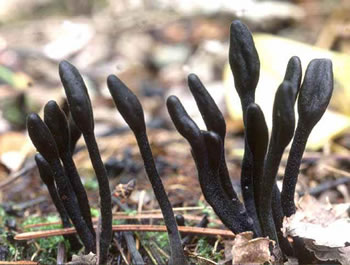
Figure 2. Trichoglossum hirsutum.
Photo © George Barron.
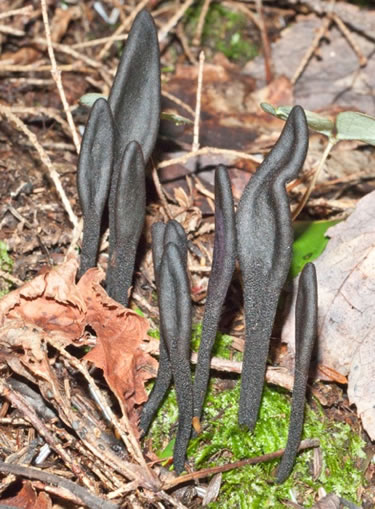
Figure 3. Distinctly furrowed, lance-shaped heads of the velvety
black earth tongue. Compressed, flattened, or furrowed heads
are characteristic of Trichoglossum hirsutum.
Photo © Dianna Smith.
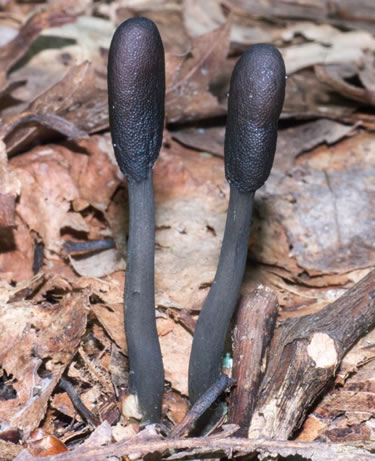
Figure 4. These blackening, older specimens of
Elaphocordyceps
ophioglossoides, can be mistaken for
Trichoglossum
hirsutum. Younger specimens are distinctive
with reddish-brown
heads
and yellow stalks. Also, E.
ophioglossoides never fruits
on wood but
is parasitic on
underground false truffles!
Photo © Dianna Smith.
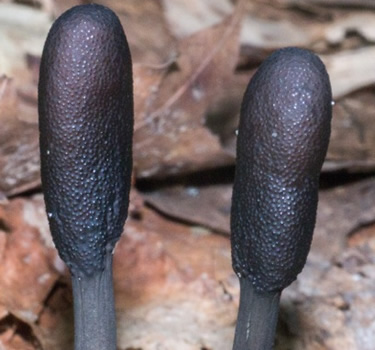
Figure 5. Close-up of cylindrical, heads of Elaphocordyceps
ophioglossoides from Figure
4 showing additional differences
from T. hirsutum.. The roughened ('pimpled') surface is due to
the protruding
necks of underlying flasklike perithecia
in which
asci are
produced. In contrast, heads of Trichoglossum
hirsutum are not
pimply and are flattened or compressed.
Photo © Dianna Smith.