Stereum ostrea
Scientific name: Stereum ostrea (Blume & T. Nees) Fr.
Derivation of name: Ster- means "tough, firm, solid."
Ostre- means "oyster" in reference to their shape.
Synonyms: Thelephora ostrea Blume & T. Nees
Common name(s): False turkey tail.
Phylum: Basidiomycota
Order: Russulales
Family: Stereaceae
Occurrence on wood substrate: Saprobic; clustered on
decaying logs, stumps, and branches of deciduous trees; June
through December.
Dimensions: Petal to fan-shaped or semicircular caps are 1-
7 cm wide.
Sterile upper surface: Covered with silky hairs; zonate with
orange, gray, reddish-brown, and other colored zones; often
whitish at the margin.
Fertile lower surface: Smooth (small bumps may be
present), buff to cinnamon-buff to reddish-brown.
Comments: This is our largest and most colorful Stereum
species. It is sometimes confused with turkey tail, a species
of polypore. Use a hand lens to make sure pores are absent.
Recent DNA evidence indicates that the
species called
Stereum ostrea
does not occur in North America and has
been misapplied to the North American species
Stereum
lobatum, S. fasciatum, and S. subtomentosum. Stereum
ostrea, as
applied to this page and in some of the picture
captions, is best considered a "placeholder" name at this
time. Some club identifiers employ a "S. ostrea complex"
designation for field identication purposes.
More information at MushroomExpert.com:
More information at TomVolkFungi.net:
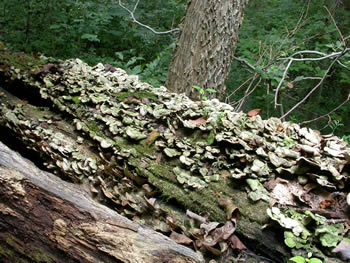
Figure 1. Stereum ostrea clustered on a log.
Photo © Gary Emberger.
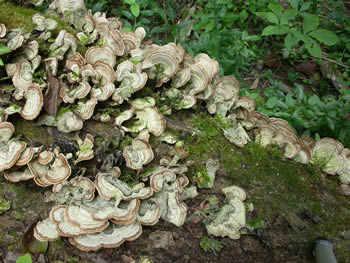
Figure 2. Overlapping clusters of false turkey tail.
Sterium ostrea fruit bodies do not tend to fuse together
laterally as much as some other Stereum species.
Photo © Gary Emberger.
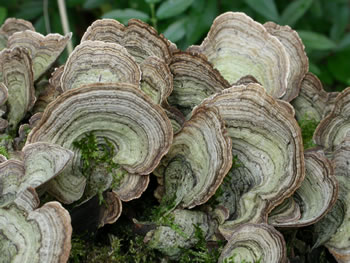
Figure 3.
The colorful, zonate upper surfaces of
Stereum ostrea. False
turkey tail is sometimes confused
with turkey tail, Trametes versicolor, a species with a
poroid
fertile surface. A hand lens will confirm the
absence of
pores in false turkey tail.
Photo © Gary Emberger.
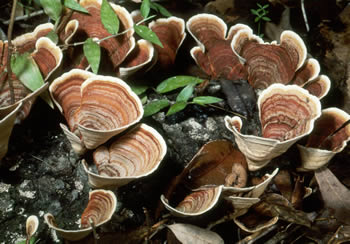
Figure 4. Some of these false turkey tails are fused in
such a way as to almost form funnels.
I have collected
some specimens that actually are in the form of a
funnel. Photo © William Roody.
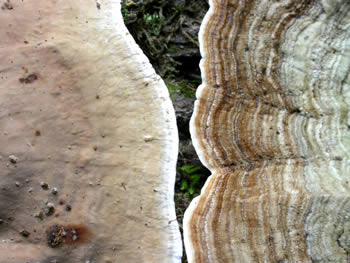
Figure 5. The smooth, fertile, basidia-bearing lower
surface (left) compared to the sterile silky, zonate upper
surface on the right. Photo © Gary Emberger.
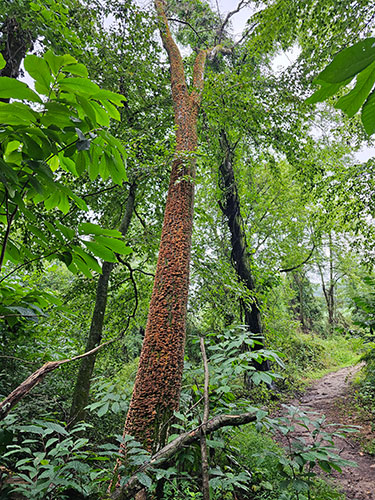
Figure 6. A standing tree festooned with false turkey
tails. Photo © George Morrison.
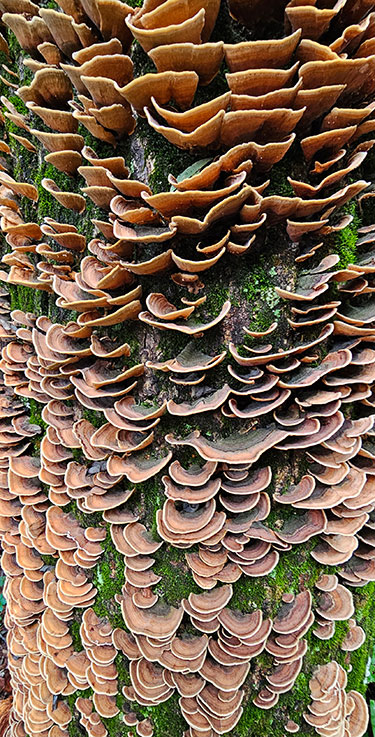
Figure 7. A closer look at some of the many false turkey
tail fruit bodies on the tree in Figure 6.
Photo © George Morrison.