Panellus stipticus
Scientific name: Panellus stipticus (Bull.) P. Karst.
Derivation of name: Styptic- means "astringent." Stypticus
is a variant spelling of stipticus. This mushroom is reputed to
have value in stopping bleeding.
Synonyms: Panus stipticus (Bull.) Fr.
Common name(s): Luminescent Panellus; Bitter oyster.
Phylum: Basidiomycota
Order: Agaricales
Family: Mycenaceae
Occurrence on wood substrate: Saprobic; grouped on
logs, stumps, and branches of deciduous wood; May
through December.
Dimensions: Caps are 1-3 cm wide; stipes 0.5-1.5 cm
long and 0.3-1 cm thick
Cap: Dingy white to pale brownish or orangish-buff; dry;
hairy to scurfy or minutely scaly.
Gills: Attached to subdecurrent; pinkish-brown.
Spore print: White.
Stipe: Whitish to brownish; hairy; lateral to eccentric; may
be absent.
Veil: Absent.
Comments: The gills of this mushroom are
bioluminescent (see Figures 5 and 6).
More information at MushroomExpert.com:
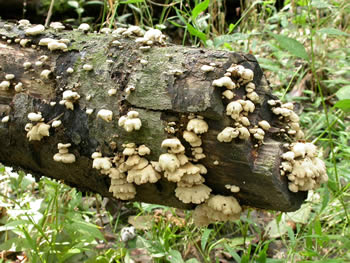
Figure 1. Groups of Luminescent Panellus on a log.
Photo © Gary Emberger.
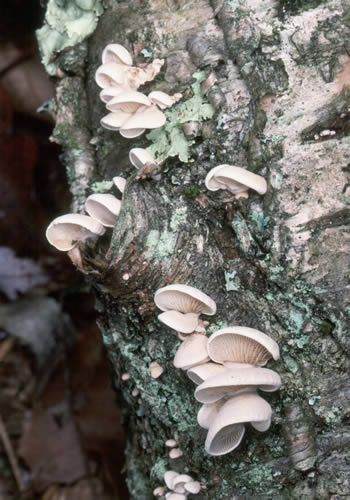
Figure 2. Caps of Panellus stipticus are convex with an
incurved margin at first. In outline, they are often
semicircular to kidney-shaped or shell-shaped.
Photo © William Roody.
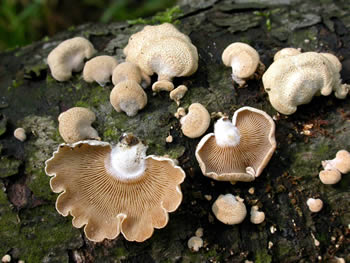
Figure 3. Note
the lateral to off-center (eccentric) stipes.
The cap margins of some specimens are lobed.
Photo © Gary Emberger.
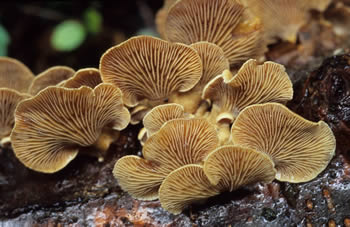
Figure 4. Because the gills are brownish, Panellus
stipticus
can be confused with species of Crepidotus.
Crepidotus has
brown spores whereas Panellus spores
are white.
Photo © Noah Siegel.
.jpg)
Figure 5. Seeking to photograph the bioluminescence
of this species, George Morrison placed this grouping
of specimens in a dark room and set the camera for a
long exposure (25 seconds). See
Figure 6 for the
result!
Photo © George Morrison.
.jpg)
Figure 6.
The greenish bioluminescence of the gills of the
specimens in Figure 5 is quite evident in this long-exposure
photograph.
Your unaided eyes can see the bioluminescence
by simply taking fresh specimens into a very dark room and
waiting several minutes for your eyes to adjust.
Photo © George Morrison.