Pholiota squarrosoides
Scientific name: Pholiota squarrosoides (Peck) Sacc.
Derivation of name: Phol- means "scale" referring to the
scaly caps of many species in the genus. Oides means
"similar to" or "resembling." In this case, Pholiota
squarrosoides resembles Pholiota squarrosa.
Synonym: Agaricus squarrosoides Peck
Common name(s): Scaly Pholiota; Sharp-scaly Pholiota.
Phylum: Basidiomycota
Order: Agaricales
Family: Strophariaceae
Occurrence on wood substrate: Saprobic and parasitic;
typically in cespitose clusters on living and dead deciduous
wood; September through October.
Dimensions: Caps 2.5-10 cm wide; stipes 5-15 cm long
and 5-15 mm thick.
Cap: Sticky to viscid; whitish at first, becoming cinnamon-
buff; covered with erect (or downcurled) and pointed tawny
scales.
Gills: Attached; pale yellow at first, becoming brownish as
the spores mature.
Spore print: Brown.
Stipe: Dry; buff; covered with tawny scales below ring, white
and smooth above ring.
Veil: Off-white partial veil leaving fibrous or membranous,
often evanescent ring on upper stalk.
Comments: This species causes a heartrot of living trees.
Michael Kuo makes the point in his website
below that there is usually enough uncertainty due to age,
variable and overlapping traits, and weather conditions,
that microscopic analysis may be required to confirm
identifications for this and most Pholiota species.
More information at MushroomExpert.com:
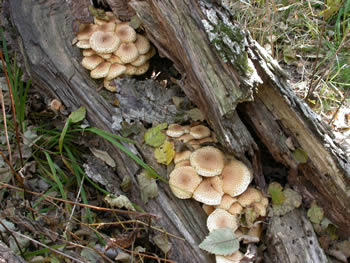
Figure 1. Cespitose clusters of Pholiota squarrosoides
growing on dead wood at Goose Island, Wisconsin.
Photo © Gary Emberger.
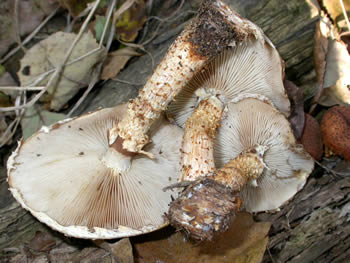
Figure 2. Note the ring remnants on the cap margin and the
ring on the upper stipe. Photo © Gary Emberger.
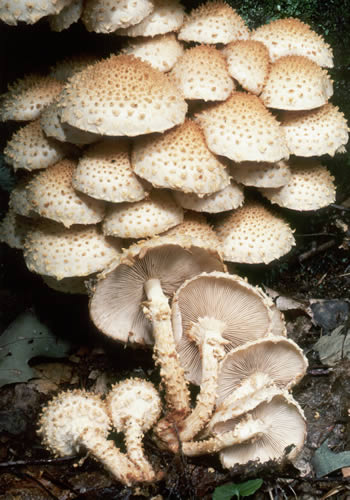
Figure 3. Note the prominent scales and the partial veil
covering the gills in the young specimens. Photo © William
Roody.