Pleurotus dryinus
Scientific name: Pleurotus dryinus (Pers.) P. Kumm.
Derivation of name: Pleur- means "side" and otus means
"ear" referring to the off-center stalk or laterally
attached
stipe of some species in the genus. Dry- means "oak" and
inus means "pertaining or belonging to." Oak is a common
substrate for this fungus.
Synonyms: Agaricus dryinus Pers.
Common name(s): Veiled oyster.
Phylum: Basidiomycota
Order: Agaricales
Family: Pleurotaceae
Occurrence on wood substrate: Saprobic/parasitic;
solitary to several on decaying logs, stumps, and trunks of
deciduous trees, also on trunks of living trees; July through
October.
Dimensions: Caps 4-12 cm wide; stipes 4-10 cm long and
1-3 cm thick.
Cap: Dry; white to cream when young, ages with
yellowish tints or bruises yellow where damaged;
cottony-hairy, then scaly
in age; veil
fragments often on
margin.
Gills: Decurrent; white, becoming yellowish with age.
Spore print: White.
Stipe: Central to eccentric; whitish.
Veil: Whitish partial veil leaving membranous ring on upper
stalk. As the specimen ages, the veil may disappear making
identification less certain.
Comments: This is the only Pleurotus species with a veil.
More information at MushroomExpert.com:
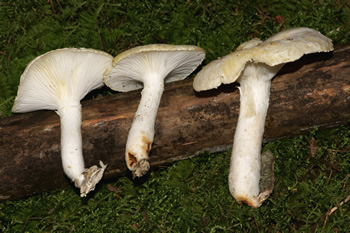
Figure 1.
Pleurotus dryinus. Photo ©
John Plischke III.
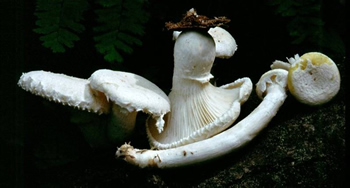
Figure 2. A collection of veiled oyster specimens. The
yellowish discoloration on the specimen on the far right
appears to be due to bruising or damage of some other
sort.
Photo
© Steve Nelsen.
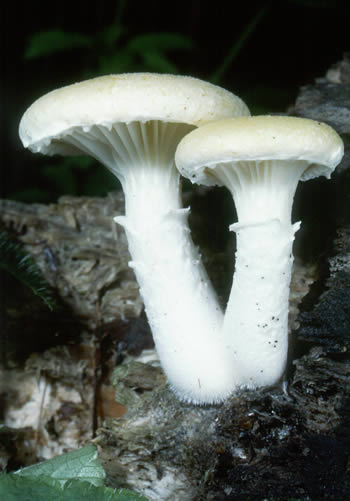
Figure 3. Veiled oyster has decurrent gills, a ring, and an
overall white color. Photo © William Roody.