Pluteus atromarginatus
Scientific name: Pluteus atromarginatus (Konrad)
Kuhner
Derivation of name: In reference to this genus of
mushrooms, the etymology of Pluteus is difficult to
determine. Atr- means "black" and margin- means "edge"
or "border" (margin). Atromarginatus refers to the dark
gill edges of this species.
Synonyms: Pluteus cervinus subsp. atromarginatus
Konrad
Common name(s): Black-edged Pluteus.
Phylum: Basidiomycota
Order: Agaricales
Family: Pluteaceae
Occurrence on wood substrate: Saprobic; solitary to
scattered on decaying conifer wood; August through
October.
Dimensions: Caps 3-10 cm wide; stipes 5-10 cm long and
5-15 mm thick.
Cap: Blackish-brown, streaked with flattened black fibers.
Gills: Free; white at first, then salmon when mature; edges
dark brown to black.
Spore print: Salmon-pink.
Stipe: Whitish, coated with small black fibers.
Veil: Absent.
Comments: This species may be confused with darker
specimens of
Pluteus cervinus but P. cervinus lacks the
dark gill edges and is not usually found on conifer wood.
More information at MushroomExpert.com
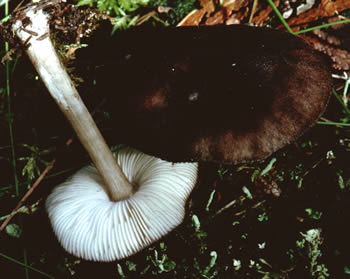
Figure 1. The dark brown cap and white, immature gills
of Pluteus atromarginatus. Photo © Steve Nelsen.
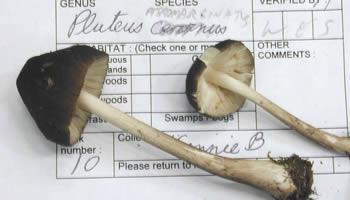
Figure 2. Specimens on a collection table at a NEMF
foray. Note the dark fibers on the whitish background
color of the stipe. Photo © Gary Emberger.
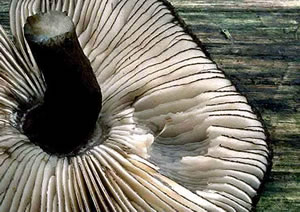
Figure 3. Dark brown to black gill edges.
Photo © George Barron.