Ganoderma applanatum
Scientific name: Ganoderma applanatum (Pers.) Pat.
Derivation of name: Ganoderma means having a "shiny
or lustrous skin"; applanatum means " flattened" and refers
to the flat, shelf-like appearance (applanate) of the fungus.
Synonymy: Fomes applanatus (Pers. ex Wallr.) Gill.;
Polyporus applanatus (Pers.) Wallr.; Ganoderma
lipsiense (Batsch) G. F. Atk.
Common names: Artist's conk.
Phylum: Basidiomycota
Order: Polyporales
Family: Ganodermataceae
Occurrence on wood substrate: Saprobic or parasitic;
solitary or scattered or in overlapping clusters on decaying
deciduous (rarely conifer) wood, sometimes living trees;
year-round.
Dimensions: Caps up to 75 cm wide.
Upper surface: Concentrically furrowed; gray to grayish-
black or brown; white margin when growing; surface hard,
crusty, finely cracked and wrinkled; dull.
Flesh of cap: Brown to cinnamon-brown, woody.
Pore surface: White, staining brown where touched; pores
minute, 5-6 per mm.
Comments: This is the well-known Artist's conk used by
artists to etch drawings (see Figure 11). Ganoderma
lobatum resembles this species. A field test to help
distinguish between the two species involves pressing
into the cap surface with a thumb. If the surface cracks
and fractures, the specimen is likely G. lobatum. The cap
surface of G. applanatum is too hard to break in this
manner
by pressing in with a thumb.
More information at MushroomExpert.com:
More information at TomVolkFungi.net:
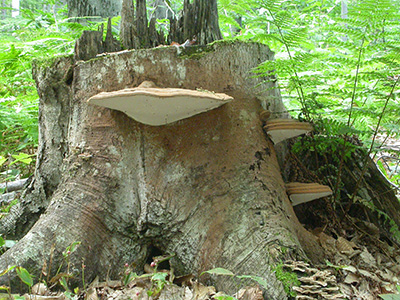
Figure 1.
Ganoderma applanatum fruiting on a hardwood stump.
Photo © Gary Emberger.
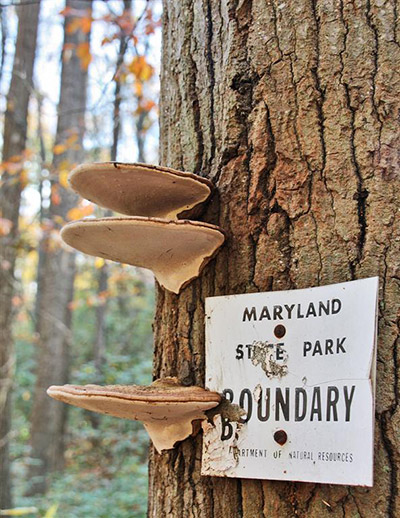
Figure 2. Ganoderma applanatum is a suitable name for
for this species. "Applanate" refers to a fruitbody that is
thin and flattened horizontally.
Photo © Glenn Brynes.
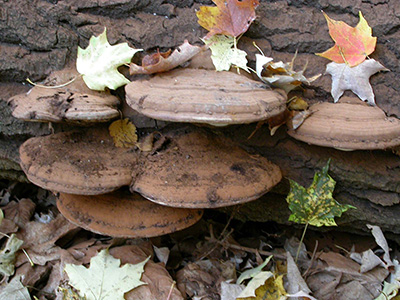
Figure 3. The dull brown color on the cap surfaces is often due
to the deposition of billions of brown spores wafting up from the
pores underneath the caps. Photo © Gary Emberger.
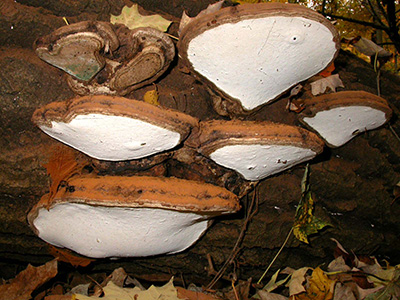
Figure 4. Newly-formed pore surfaces are strikingly white.
Photo © Gary Emberger.
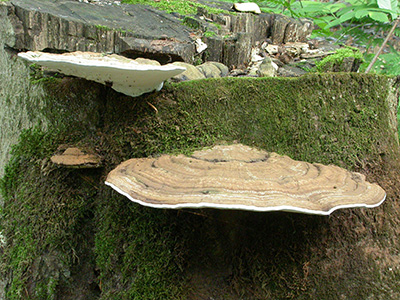
Figure 5. The cap margins can be quite thin.
Photo © Gary Emberger.
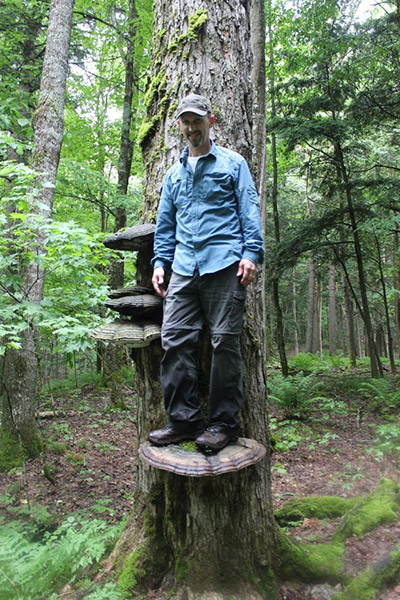
Figure 6. As a perennial, Ganoderma applanatum can become
quite large. Old specimens are often quite woody and firmly
attached to their substrate!
Photo © Andrew Loyd.
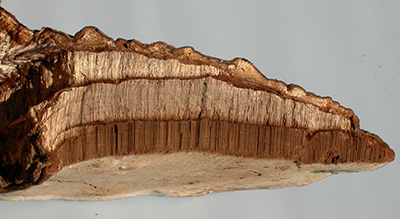
Figure 7. Sectioning a cap usually reveals several clearly defined
layers of tubes. The older tube layers of this three-year-old
specimen appear "stuffed" with white mycelium.
Photo © Gary Emberger.
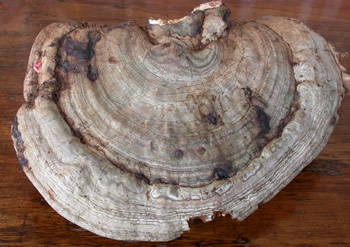
Figure 8. Perennial conks sometimes show interesting
growth responses to events occurring during their long
lives.
One
such event can be inferred from the series of pictures
in
Figures 8-10. At
one time, this conk was oriented like
those
in Figure 1 with the top surface (shown) facing up.
Photo © Gary Emberger.
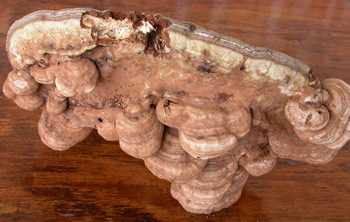
Figure 9. This is the orientation that the conk in Figure 8
was in when found.
Instead of a pore surface on the
underside, there were instead a dozen or more tiny conks.
Photo © Gary Emberger.
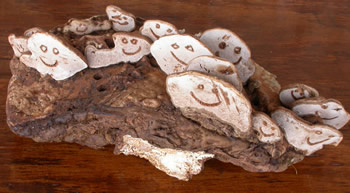
Figure 10. The pore surfaces of the tiny conks are at right
angles to the pore surface of the original conk. Here's what
happened: the tree bearing the original conk fell over and the
still-living conk
responded to its altered gravitational
orienation by forming new conks, each arising from the pore
surface of the original conk and each properly oriented
to drop its spores into the air below.
Photo © Gary
Emberger.
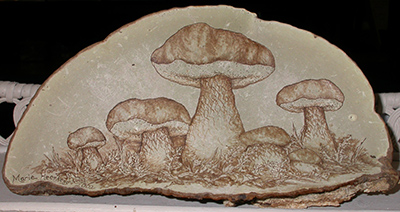
Figure 11. As evident in Figure 10, the white pores undergo
a brown-staining reaction when smudged
by handling or
drawn on with a pointed object. In the hands of an artist,
the brown-staining reaction yields a work of art. The
picture above is an example of
pyrography or "writing with
fire" by Marie Heerkens. Marie
writes about her work in
the Winter 2005 issue of Mushroom
the Journal. Photo ©
Gary Emberger.