Apiosporina morbosa
Scientific name: Apiosporina morbosa (Schwein.) Arx
Derivation of name: Morb- means "disease" and is a fitting
epithet for this parasitic fungus.
Synonyms: Sphaeria morbosa Schwein.
Common name(s): Black knot of cherry, poop on a stick.
Phylum: Ascomycota
Order: Pleosporales
Family: Venturiaceae
Occurrence on wood substrate: Parasitic; solitary to several,
forming growths on branches and twigs of cherry and plum
trees; found year-round.
Dimensions: Fruitbody 3.5 to 14 cm long and 1 to 2.5 cm
thick.
Description: These black, hard, furrowed and cracked
ascocarps form irregular elongated swellings which clasp and
surround twigs of cherry and plum. Perithecia are embedded
just below the surface.
Edibility: Inedible.
Comments: This fungus is a widespread and destructive
pathogen of cherry trees.
More information at MushroomExpert.com:
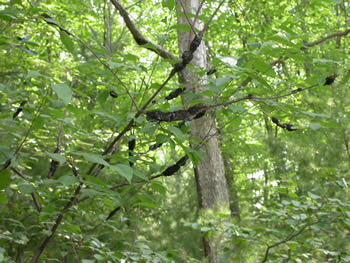
Figure 1. Appearance of black knot on branches of wild black
cherry (Prunus serotina). Photo © Gary Emberger.
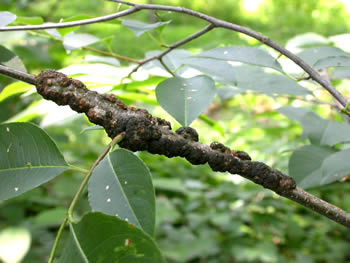
Figure 2. The black, carbonaceous growths of Apiosporina
morbosa can be quite extensive on a twig. Note that the twig
still supports living leaves. Photo © Gary Emberger.
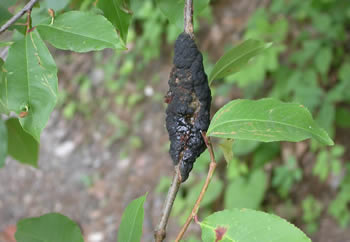
Figure 3. This growth has completely encircled the twig.
Photo © Gary Emberger.
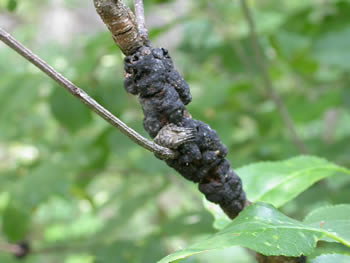
Figure 4. The growths are quite irregular, bumpy, and
fissured. Photo © Gary Emberger.
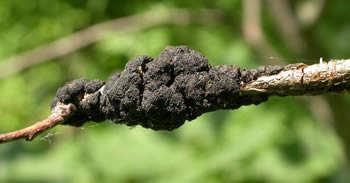
Figure 5. Beneath the minutely bumpy surface is a layer of
perithecia containing asci with ascospores.
Photo © Gary Emberger.