Entoloma abortivum
Scientific name: Entoloma abortivum (Berk. & M.A. Curtis)
Donk
Derivation of name: Abortivum refers to the misshapen
structures often found in association with this species.
Synonyms: Clitopilus abortivus Berk. & M.A. Curtis
Common name(s): The mushroom's traditional common
name is the "aborted
entoloma." However, given the nature of
the aborted forms (see comments below), a better name is
"aborting entoloma."
Phylum: Basidiomycota
Order: Agaricales
Family: Entolomataceae
Occurrence on wood substrate: Saprobic on wood:
solitary
to clustered on or near decaying deciduous wood
such as
stumps, logs, or buried wood; August through
November.
Dimensions: Caps are 5-10 cm wide; stalks are
2.5-10 cm
long and 5-15 mm thick.
Cap: Dry; gray to grayish-brown.
Gills: Decurrent; pale gray when young and pinkish at maturity.
Spore print: Salmon-pink.
Stipe: Colored like the cap.
Veil: Absent.
Aborted structures: The presence of misshapen fruitbodies,
described as "aborted," is actually what most people use to
identify this Entoloma species. These aborted structures
may be
found with or without the gilled Entoloma
abortivum nearby.
The aborted
structures are 2.5-5 cm tall
and 2.5-10 cm wide;
whitish masses
with pinkish marbling
within a spongy white flesh.
Edibility: Edible with caution, see below.
Comments: For years, field guides indicated that the
aborted
forms of Entoloma developed in response to being
parasitized
by Armillaria spp. such as Armillaria mellea.
Recent work
indicates that the
relationship is
the other way
around, that is,
Entoloma is the
parasite and the aborted
structures are
Armillaria spp. Both
the aborted Armillaria
structures and
Entoloma
abortivum are edible but care
must be taken not to
eat other
members of the Entoloma
genus, some of which are
poisonous.
More information at MushroomExpert.com:
More information at TomVolkFungi.net:

Figure 1. Entoloma abortivum and aborted structures.
Photo © William Roody.
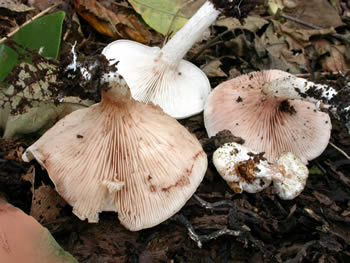
Figure 2. Mature pinkish gills and immature white gills of
Entoloma abortivum. Photo © Gary Emberger.
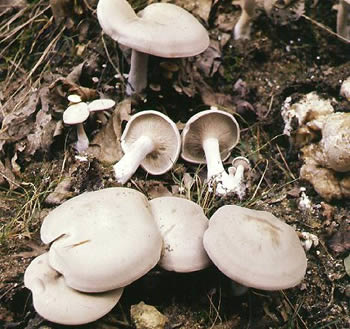
Figure 3. Typical gray-capped Aborted Entoloma. Aborted
Entoloma is no longer a
very appropriate common name
because we now better understand the true identity of the
aborted
structures. Photo © Larry Grand.
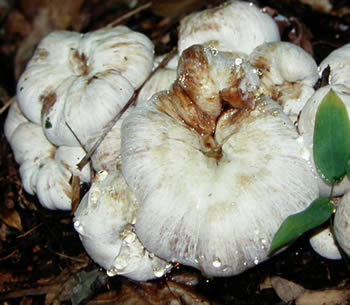
Figure 4. Closeup of aborted Armillaria spp.
The aborted
forms are described as whitish, chalky, bumpy, or streaked
with a firm to spongy texture. Photo © Gary Emberger.
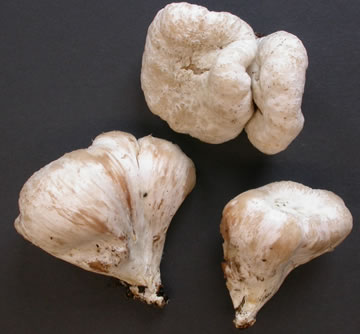
Figure 5. Three aborted forms.
The inside flesh of these
specimens is shown in Figure 6. Photo © Gary Emberger.
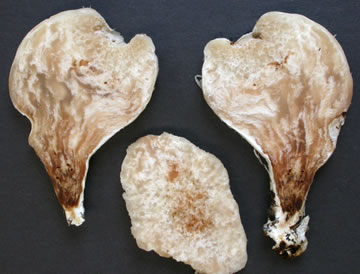
Figure 6. The typical marbled, streaked flesh of
aborted
Armillaria structures. These sections are of the aborted
forms
shown in Figure 5. Photo © Gary Emberger.
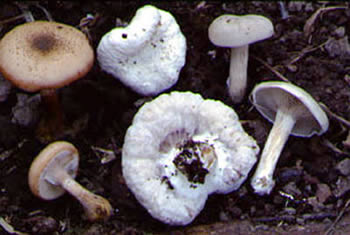
Figure 7. In view from left to right is Armillaria mellea,
aborted Armillaria mellea, and Entoloma abortivum,
the players in our drama of parasitism and mistaken
identity. Photo © John Plischke III.