Grifola frondosa
Scientific name: Grifola frondosa (Dicks.) Gray
Derivation of name: Grifola means "something intricate
or
braided" such as a fishnet or woven basket.
Frondosa means full of leaves (i.e., many caps).
Synonymy: Polyporus frondosus Dicks.: Fr.
Common names: Hen of the woods, maitake, sheep's head.
Phylum: Basidiomycota
Order: Polyporales
Family: Meripilaceae
Occurrence on wood substrate: Parasitic; in dense clusters
of overlapping caps on the ground at the base of deciduous
trees and stumps, especially oak and maple; September
through November.
Dimensions: Rosette-like clusters can be as large as 60 cm
across. Individual caps are 2-7 cm wide and attached to a
branching stalk which can be 2-4.5 cm long and up to 10 cm
thick.
Upper surface: Gray to brownish-gray or dark brown;
somewhat zonate; smooth or finely roughened
Pore surface: White to yellowish; pores 1-3 per mm.
Edibility: Edible, considered choice.
Comments: This weak parasite of tree roots can be found at
the same site year after year. It is a highly sought after edible
species.
More information at MushroomExpert.com:
More information at TomVolkFungi.net:
Figure 1. This good-sized specimen of Grifola frondosa
made
for a delightful find during a foray.
Photo © Gary Emberger.
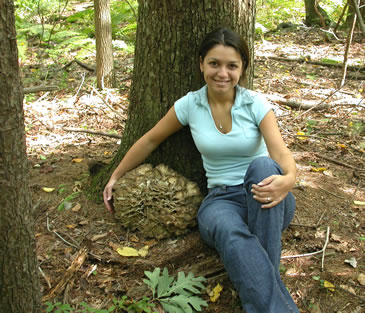
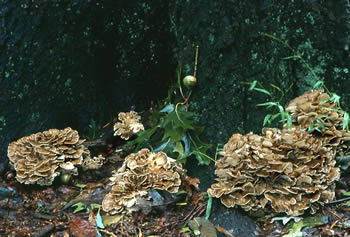
Figure 2. Several clusters at the base of a tree. Photo ©
Pam Kaminski.
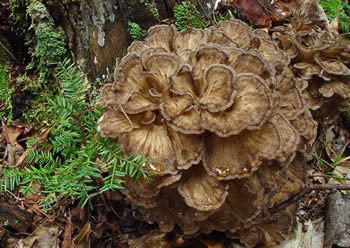
Figure 3. Hen of the woods. Photo © David Work.
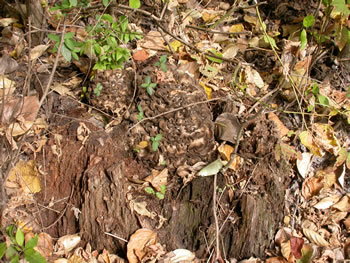
Figure 4. A well-camouflaged specimen on top of this
stump. Photo © Gary Emberger.
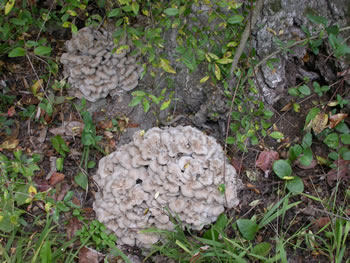
Figure 5. In addition to brownish colors, some Grifola
frondosa specimens have gray caps. Photo © Gary
Emberger.
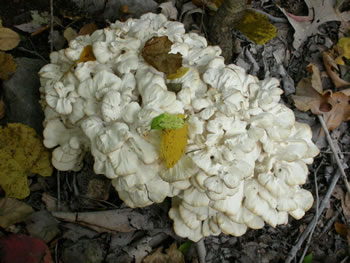
Figure 6. An unusual white specimen of hen of the woods.
The specimen was not particularly old nor was it exposed
to the direct rays of the sun. A gray-colored specimen
was nearby. Photo © Gary Emberger.
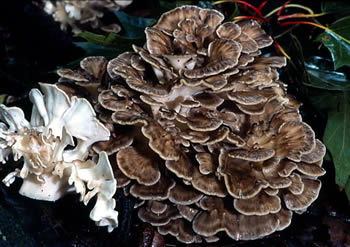
Figure 7. The white pore surface contrasts sharply with
the
brownish caps. Photo © Pam Kaminski.
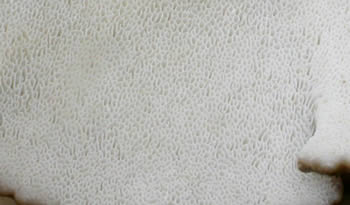
Figure 8. White pore surface of Grifola frondosa. The
individual pores are easy to see at 1-3 per mm.
Photo © Gary Emberger.