Lycoperdon perlatum
Scientific name: Lycoperdon perlatum Pers.
Derivation of name: Lyco- means "wolf" and perdon
refers
to flatulence.
Lycoperdon means "wolf fart" perhaps
in reference to the manner in which these puffballs puff
their spores out through a central hole.
Perlat- means
"widespread" perhaps in
reference to the broad distribution
of this species in North
America.
Synonyms: Lycoperdon gemmatum Batsch
Common name(s): Gem-studded puffball; Devil's snuffbox.
Phylum: Basidiomycota
Order: Agaricales
Family: Agaricaceae
Occurrence on wood substrate: Saprobic; solitary to
scattered or clustered on the ground or sometimes on well-
decayed wood or mulch; July through October.
Dimensions: Fruit bodies are 2.5-6.5 cm wide and 2.5-8 cm
tall.
Description: This puffball species is round to pear or turban-
shaped usually with an elongate, stalk-like base. When young it
is white and covered with conical white spines with shorter
spines and granules between them. With maturity the longer
conical spines are usually broken off leaving a pattern of pits or
net-like scars on an aging yellow-brown surface. The spore-
producing internal tissue (gleba) is moist and white at first,
turning olive-brown and powdery when mature. A pore-like
mouth forms (the ostiole) at the apex at maturity allowing
spores to be "puffed out" when the outer case is disturbed by
raindrops or twigs striking it.
Edibility: Edible.
Comments: This species is edible only when the internal spore
tissue (gleba) is completely white and uniform in appearance.
Care
must be taken not to confuse puffballs with young stages
of Amanita species which are enclosed by a universal veil.
A longitudinal section of a young Amanita will reveal some
tissue
differentiation into gills. Gills never occur in puffballs.
More information at MushroomExpert.com:
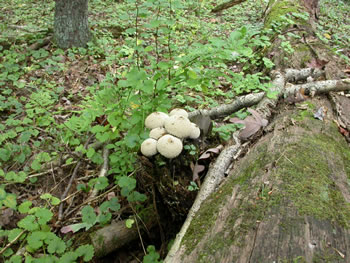
Figure 1. A cluster of Lycoperdon perlatum on decaying
wood. Photo © Gary Emberger.
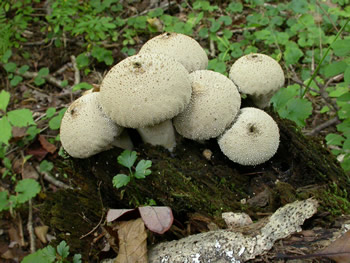
Figure 2. Close-up of Figure 1. Openings (ostioles) form
on mature specimens in order to
facilitate spore release.
Photo © Gary Emberger.
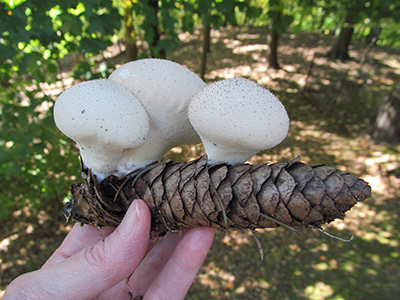
Figure 3. A very surprising habitat - the cone of a Norway spruce
(Picea abies) tree! Many thanks to Cecily Franklin of the Western
Pennsylvania Mushroom Club for submitting this photograph.
Photo © Cecily Franklin.
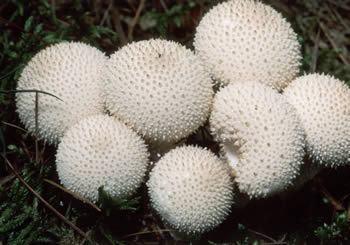
Figure 4. Cluster of young fruit bodies of Lycoperdon
perlatum. Note the absence of ostioles (see Figure 2.)
Photo © William Roody.
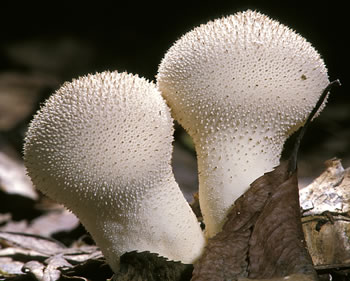
Figure 5. This side view of gem-studded puffball shows the
sterile stalk-like base supporting the upper spore-producing
or fertile portion covered by conical spines. Photo © Fred
Habegger.
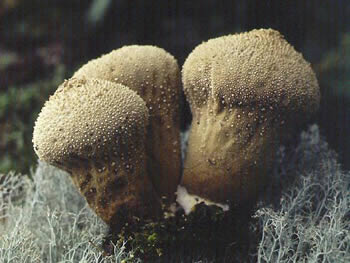
Figure 6. Lycoperdon perlatum turns a buff or yellow-
brown color with age. Photo © Larry Grand.
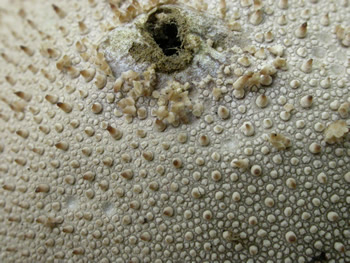
Figure 7. The surface of the gem-studded puffball is
covered by large conical spines with shorter
spines and
granules
between them. The large opening at the top is the
ostiole. Photo © Gary Emberger.
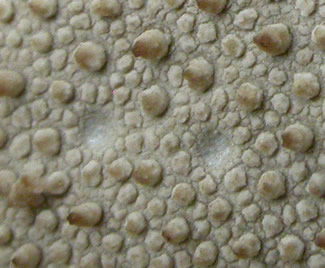
Figure 8. An enlargement of an area from the lower left
of Figure 7. The two empty depressions in the center
mark the
locations of large, readily detachable
conical
spines. Photo © Gary Emberger.