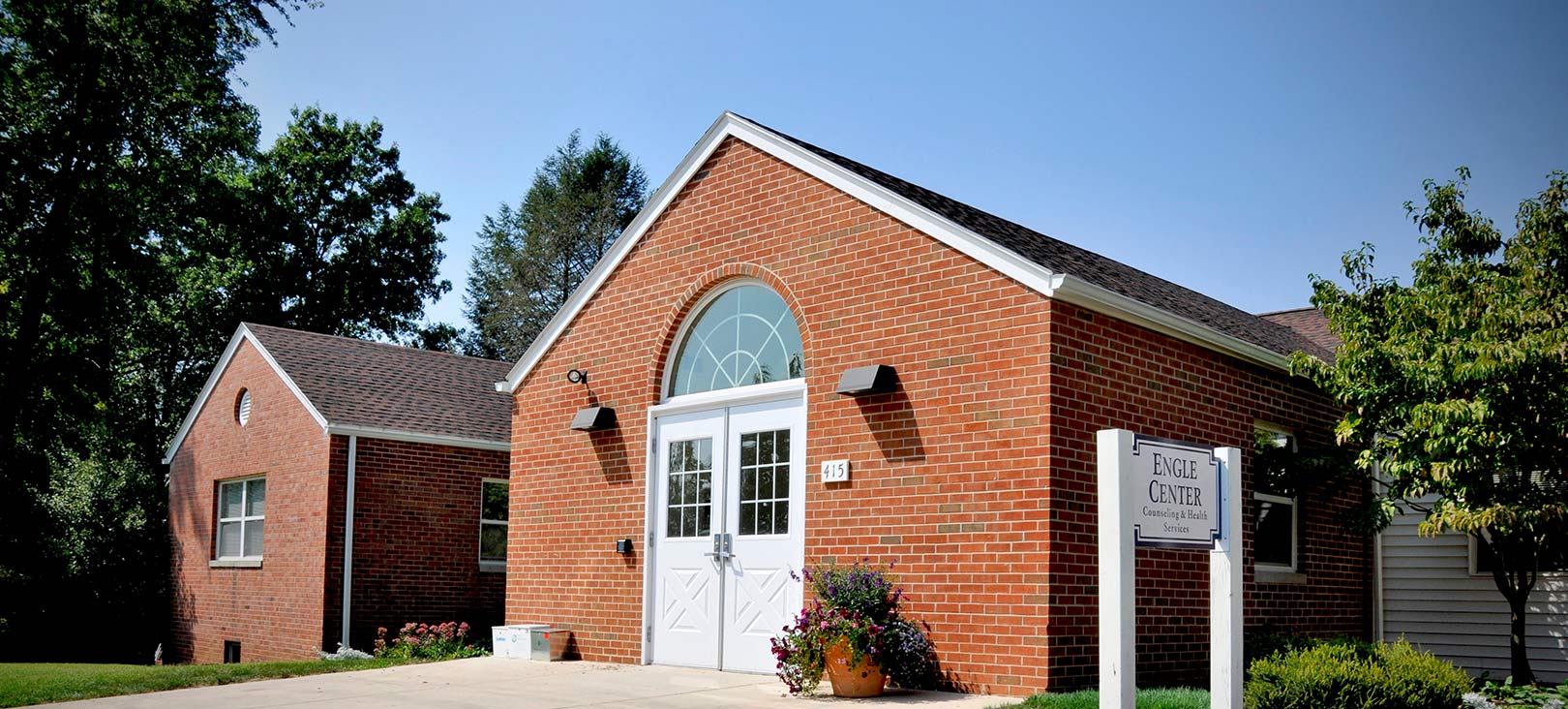

Counseling Services

Why do students come to Counseling Services?
Messiah students come to Counseling Services for a variety of issues. Typical problems include depression, anxiety, poor self-esteem, loneliness, guilt, relationship problems, eating disorders, sexual abuse, date rape, alcohol or drug abuse, family problems, academic difficulties, etc. The problems we help students with may have begun while they were living at home or they may be new to their college experience. One of these may be a problem for you, or yours may be something quite different. Students who are engaged to be married also come to Counseling Services for premarital counseling. For more information on receiving premarital counseling through the Engle Center, click here.
Isn't it better if I try to work things out for myself?
Sometimes, yes. Many times a roommate, a faculty member, or a good friend will be able to provide the advice, support, or encouragement needed to deal with your concern. Often it is good to rely upon your own resources to cope with life. There are times, though, when your efforts are not enough; you've prayed, sought the counsel of friends or tried a variety of approaches on your own, and yet the problem persists. It is at that point that the assistance of trained professionals is needed. Sometimes students worry that their friends or family will look down on them for coming to counseling, but getting help for a problem you can not solve is a sign of wisdom; not weakness.
What about confidentiality?
Counseling Services maintains strict standards of confidentiality. We will not release any records of your counseling or discuss your case with anyone, unless you give us your written consent. No record of counseling goes into your administrative school records, and school officials are not notified that you are receiving counseling. Family members will not be notified that you are in counseling unless you request us to, and we will not speak to them about your counseling without your permission. Under very extraordinary conditions, such as when a student's life is in danger, or when the safety of others is at risk, confidentiality may need to be broken. Feel free to discuss any concerns about confidentiality with your counselor.
What happens during counseling?
When a student contacts our office to set up a counseling appointment, we ask them to complete an "intake form" prior to the first appointment. In addition to providing some basic background information, the intake form helps us to select the counselor who is best suited to see you for your initial visit. During that first appointment the counselor will speak with you to get information about your current concerns, as well as additional background information that will help us to better understand your needs. After the intake interview, we will arrange for you to meet with the member of our counseling staff who is best suited to help you with your concerns. Sometimes you will be working with the counselor you spoke with initially, and sometimes not.
Although the specifics of your particular problem will make your counseling unique, there are some general characteristics to be found in all counseling sessions. We view the counseling process as a partnership between the counselor and the student. We are here to help you meet your goals, and that means you are an active participant in the counseling process, rather than a passive recipient. Although it may be tempting to say to the counselor, "Just tell me what to do!", in the long run you will benefit most from counseling that helps you develop skills for creating your own solutions.
The number of times you meet with a counselor depends on the nature of the problem. Fortunately, many problems can be dealt with in a matter of a few sessions (sometimes only one or two); however, some problems require ongoing sessions for a longer period. Often the counselor can give you a good idea of how many counseling sessions will best suit your individual situation.
Scheduling an appointment is simple- you can contact us by phone or stop by the Engle Center and speak with our receptionist. To call from off campus, our number is 717-796-5357. From on-campus, call us at ext. 5357.
In order to be the most helpful we need to know something about you. There are two ways you can do that. You can go online to http://titaniumweb.messiah.edu/WCMenu.aspx and click on the “Counseling Intake” button. Alternatively, you can come to the Engle Center and ask for the “counseling intake netbook.” Either way, you go to that site and, after clicking the “Counseling Intake” button, you complete each of the online pages that you see, clicking “Continue” after completing each page. After the last page, in which you provide your available schedule, you will be told that you have finished the “paperwork.” If you are in the Engle Center, return the netbook to the administrative assistant at the front desk.
After we have received this information, which we will keep strictly confidential, we select the counselor who is best suited to meet with you for your initial appointment. We are usually able to arrange for you to meet with a counselor within a week of receiving your information. For additional information please read our Welcome to Counseling Services Brochure.
If you are in crisis and need to be seen quickly, it's very important for you to communicate this clearly when you call for an appointment, so an emergency appointment can be arranged.