Counseling Accelerated Program
The Counseling Accelerated Program is perfect for students passionate about helping others and interested in psychology. This Christian, faith-based program prepares you for careers in school counseling, mental health services or social work, blending faith and professional skills.
100%

of first-year
students receive financial aid
students receive financial aid
98%

of the class of 2025 were
employed or in a graduate program
within 6 - 9 months after graduation
employed or in a graduate program
within 6 - 9 months after graduation
12:1

student to faculty ratio
Accelerated Counseling Program at a Christian University
Combine your undergraduate and graduate studies to start your counseling career sooner
Messiah’s accelerated counseling program is designed for students ready to make a meaningful impact in the lives of others. This five-year program allows motivated students to earn both a bachelor’s and master’s degree, preparing them for careers in schools, clinics, community agencies and private practice.
You can choose a foundation in psychology pre-counseling, exploring human behavior and research-based approaches to mental health, or human development and family science pre-counseling, focusing on family systems and relational dynamics across the lifespan. The graduate counseling curriculum builds on this foundation, equipping you with the skills, professional knowledge, and ethical grounding needed to serve diverse communities and integrate Christian faith into your counseling practice. When in the Master of Arts in counseling portion of the program, you may choose from tracks in clinical mental health counseling; school counseling; or marriage, couple and family counseling.
When studying in the accelerated counseling program at Messiah University, you will:
- Earn a Bachelor of Arts (B.A.) in psychology (pre-counseling) or human development and family science (pre-counseling) after four years, and a Master of Arts (M.A.) in Counseling after your fifth year
- Gain hands-on experience in schools, community agencies, clinics or counseling centers through internships and field placements tailored to your career goals
- Develop the professional knowledge and skills required for licensure as a professional counselor by choosing one of three counseling tracks: marriage, couple and family; clinical mental health; and school counseling
- Learn from faculty who are actively engaged in counseling practice and research, bringing real-world insights into the classroom
- Integrate Christian faith and professional ethics into your counseling practice, preparing you to serve diverse individuals, couples and families
- Participate in experiential learning opportunities that allow you to apply counseling theories and techniques while making a tangible impact in your community
- Engage in research, assessment and evidence-based practice to strengthen your understanding of human behavior and therapeutic interventions
Students enrolled in the accelerated counseling program at Messiah University are prepared to meet the educational requirements for licensure as a professional counselor (LPC), marriage and family therapist (LMFT) or certification as a school counselor (requirements vary by state).
Graduates are equipped to serve in a variety of professional counseling settings, including:
- Schools
- Mental health clinics
- Community agencies
- Hospitals
- Private practice
- Marriage, couple and family counseling centers
- Substance use and behavioral health programs
- Residential or youth services programs
For more information on career planning for counseling and related fields, visit the Messiah University Career and Professional Development Center.
You will choose one of two bachelor’s degrees to complete the counseling accelerated program.
- Psychology (pre-counseling): This major is a great fit for students interested in human behavior, mental health and the science behind therapeutic interventions. You’ll build a strong foundation in psychological theory and research while exploring topics like development, social interactions and assessment. This preparation equips you with the skills to understand and support individuals in a wide range of counseling settings.
- Human development and family science (pre-counseling): This major is ideal for students who are drawn to working with individuals, couples, families and communities from a family systems perspective to promote relationships and well-being. Through an interdisciplinary approach, you’ll study human growth and development, family dynamics and relational skills across the lifespan. Experiential learning and practical coursework prepare you to apply this knowledge in schools, community agencies and counseling-focused programs.
The 5-year, accelerated B.A./M.A in counseling curriculum is designed for incoming first-year students seeking an accelerated path to completion of a master's in counseling. First-year students who meet Messiah University’s undergraduate admission requirements are eligible for the Accelerated Counseling program. Students will be offered informal check-ins with the graduate counseling program during the first 2 years to ensure they are meeting program expectations and on track for progression into graduate coursework.
In semester 5, students on the accelerated pathway submit a graduate application, complete an interview, and have a minimum cumulative undergraduate GPA of 3.0 before enrolling in graduate-level counseling courses. The application will require submission of a professional or academic reference and identification of the specialization (Clinical Mental Health, Marriage, Couple and Family, or School Counseling) that a student desires. Students with a GPA lower than 3.0 may be considered for conditional admission in accordance with Messiah University’s graduate admission policies.
Before beginning graduate-level counseling coursework, students must also successfully complete a three-credit internship (INTE 391) as part of the Psychology Pre-Counseling (B.A.) or Human Development and Family Science Pre-Counseling (B.A.) degree requirements.
Current Messiah students may also be considered for an accelerated path if they can complete the undergraduate requirements within the accelerated timeline. Students approved to progress to graduate coursework will work with a graduate counseling faculty advisor to identify which courses they intend to register for in semester 7, when graduate coursework would typically begin.
Questions regarding the counseling accelerated program may be directed to lsmock@messiah.edu.
First-year students who meet Messiah University’s undergraduate admission requirements are eligible to apply to the Accelerated Counseling program. Current Messiah students may also be considered if they can complete the undergraduate requirements within the accelerated timeline. You can review the undergraduate admissions process and criteria on our website.
Questions regarding the counseling accelerated program may be directed to lsmock@messiah.edu.
Programs related to Counseling (Accelerated)
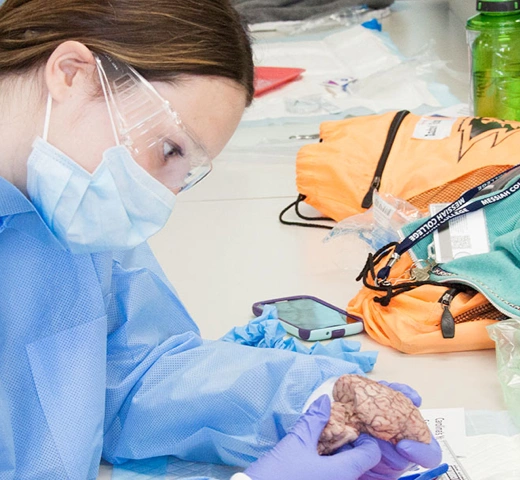
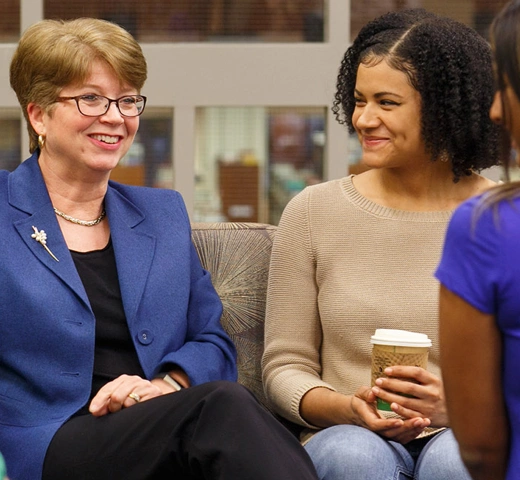
Counseling accelerated program courses will equip students with the knowledge and skills needed to excel in their chosen field, whether entering the workforce or pursuing advanced studies in competitive graduate schools.
Psychology (B.A.) pre-counseling / Master of Arts in Counseling (M.A.)
Human development and family science (B.A.) pre-counseling / Master of Arts in Counseling (M.A.)
Programs related to Counseling (Accelerated)
Careers and outcomes
Where our grads work
Graduates of the counseling accelerated program work in positions of leadership in their places of employment, using the tools and knowledge a Messiah University education prepared them with. Each year, eager employers and some of the nation's best graduate schools welcome Messiah graduates into their organizations.
98% of the Class of 2025 respondents were employed or in graduate school within 6-9 months of graduation.
Our Alumni
Regional and national employers seek out Messiah graduates for their academic preparation, work ethic and personal character. The transformation you experience at Messiah readies you to transform the lives of others through your chosen career path.
Programs related to Counseling (Accelerated)
Messiah's unique approach to hands-on learning
Learning in the classroom is important but actually applying that knowledge in a hands-on way can make all the difference. At Messiah University, the Experiential Learning Initiative (ELI) allows Messiah to take this hands-on learning to a new level by giving students the opportunity to apply what they have learned to various real world contexts--such as an internship/practica, service learning, off-campus program, holding a student leadership position, or participating in undergraduate research.
Programs related to Counseling (Accelerated)
Last updated: