Book of the Year
Book of the Year (BOTY)
The Book of the Year for 2026-27 is Dante's The Inferno.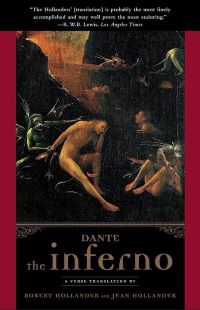
Midway in the journey of our lifeI came to myself in a dark woodfor the straight way was lost.
Many readers have found these among the most evocative, powerful, and honest lines in all of literature. Every person who has had the experience of feeling lost. Dante helps readers navigate through these times of trouble and to pursue paths of Christian pilgrimage and discipleship.
Student requirements for the BOTY in 2026-27:
- By August 24, 2026 - Read introductory materials and Cantos 1 and 2 (pages xii-44).
- By September 21, 2026 - Read Cantos 3-10 (pages 45-202) for seminar.
- Week of September 21-25, 2026 - Participate in discussion seminar on Cantos 3-10.
- October 8, 2026, 7:30 p.m. - Attend lecture by Victor Sensenig on Dante.
- By October 26, 2026 - Read Cantos 11-17 (pages 203-326).
- By January 25, 2027 - Read Cantos 18-27 (pages 327-511) for seminar.
- Week of January 25-29, 2027 - Participate in discussion seminar on Cantos 18-27.
- Date TBA in Spring 2027 - Attend lecture on Dante.
- By March 22, 2027, read Cantos 28-34 (pages 512-639).
Dante’s Inferno - Reading Questions
General questions
- One of the reasons why so many over the ages have found Inferno a great book is that can be rightly and profitably read in different ways. One approach has been to see Dante’s epic poem as an anatomy and analysis of the soul. Another has been to see it as an analysis of sin and the consequences of different sins. How do you respond to each of these ways of reading Inferno? What seems to you to be their respective strengths or benefits?
- One of the things that makes Inferno so brilliant (and occasionally confusing for the reader) is that there are two different Dantes in this poem—Dante the narrator and Dante the pilgrim. Consider this as you read. Why do you think this is this a feature of Inferno? What is the role that each Dante plays? How does this authorial approach influence how you respond to the poem?
- Compare Inferno to other classic epics with which you may be familiar (e.g. Gilgamesh, the Odyssey, the Aeneid, etc.) What difference does it make that Dante himself appears as the central character in his epic?
- Some readers see Inferno as at least in part Dante’s autobiography. To the degree this is so, compare Inferno to other autobiographies you have read.
- Where do you see Dante using Scripture (referencing passages, thinking with them, etc.) throughout his epic poem? What’s your response to these various uses of Scripture? Which ones make sense to you and which surprise you? Where Dante’s use of Scripture surprises you, what might account for this? What distances (historical, theological, experiential) are there between Dante and you that might explain the ways in which he responded to and used Scripture?
- Some readers of Dante see him as being greatly interested by numbers and numerical patterns. Do you see this as you read Inferno? If so, can you perceive any reasons for the various numerical patterns Dante uses?
- Why do you think Dante designed Hell in the way he did?
- How do you respond to the “ordering” of the Hell that Dante imagines, the way in which what are portrayed as more heinous sins are treated later in Inferno and are located in a deeper circle of Hell? Does this seem just to you? Do you ever disagree with Dante’s ordering? If so, what might explain this?
- Compare circle one (the abode of the “virtuous pagans”) with later circles. Why does Dante portray their place so differently?
- How does Dante the narrator respond to the souls he meets in Hell? Sometimes he seems inclined to pity or sympathize with them. How does Dante himself evaluate these responses? How does Virgil evaluate them? How do you evaluate them? Should Dante have pity or sympathy for the souls he encounters in Hell? How might reading Dante’s Inferno influence how you think about and respond to sin?
- In the literal sense Dante’s journey in Inferno was a success. Dante made it the whole way down and through without being lost. Was Dante’s journey a success in the allegorical sense? What did Virgil try to teach him and what did Dante learn?
- How does Dante’s Inferno and your reading of it relate to our theme of Justice this year? Do you find Dante’s imaginative picture of Hell to be a place where justice is done? Why or why not?
Questions on Cantos 1-2 [The dark wood of error and meeting Virgil the guide]
- Inferno opens with the famous lines: “Midway in the journey of our life / I came to myself in a dark wood / for the straight way was lost.” Many readers have found these among the most beautiful, evocative, and powerful lines in all of literature. How do you respond to this opening? What does it make you think or feel?
- In Dante’s opening lines, there is both the plural “our” (“nostra”) and the singular “I” (“mi”). Why do you suppose he wrote it in this way? Is there significance to this choice of words?
- Where was Dante trying to get to and why couldn’t he get there?
- At what point in Dante’s life does he lose his way on the path of righteousness?
- Dante encounters a leopard, a lion, and a she-wolf in Canto 1. What do you think these beasts symbolize, if anything? Which animal seems to pose the greatest problem for Dante?
- Why does Dante have a pagan, Virgil, guide him through Hell, and not a Christian, like St. Paul or St. Augustine?
- Should Dante go with Virgil into Hell?
Questions on Canto 3 [Circle 0: The neutrals]
- What do you think about the words inscribed on the entrance to Hell? What does Dante mean by these words? Do these words match your understanding of Hell?
- The opportunists provide a foretaste of eternal punishment. What does such punishment consist of?
- How do the damned respond when the ferry approaches? What accounts for this response?
- The “neutral angels” in Canto 3 are the product of Dante’s poetic imagination, not necessarily orthodox Christian theology. What do you think of this move by Dante? Why do you think he created these figures?
- What does Virgil mean when he writes that the fallen souls in Hell have “lost the good of the intellect” (3.18)? Note: In reading later Cantos, continue to note what Dante says about the intellect and reason.
Questions on Canto 4 [Circle 1: Limbo]
- What kind of souls are in Limbo? What is their defect (difetto)?
- Why are the “virtuous pagans” in Hell?
- Why were some unbaptized rescued from Hell and others were not? Does this follow from a standard of justice or fairness?
- To what extent, if at all, are great heroes and authors from classical history suffering? How are they being punished, if at all?
- The souls of the virtuous pagans can be found in an area where a fire carves out a hemisphere of light in the darkness of Hell. When Dante asks about the reason for their privileged position, Virgil responds: “Their honorable fame / which echoes in your life above / gains favor in Heaven, which thus advances them.” (4.76-78). These lines (and others in the poem) raise the question: What is Dante’s relationship to fame and to honor? How does he view these things?
Questions on Canto 5 [Circle 2: Lust]
- What are the spirits in Canto 5 being punished for? Do you think their punishment is too light, too heavy, or just right?
- How does Dante react to this suffering? What is the appropriate reaction to suffering in Hell?
- The lover that speaks with Dante in Canto 5 says she has “stained the world” (5.90) through her sins. What does she mean by this? How does this relate to Christian beliefs about the forgiveness of sins?
- Why do you think Dante makes lust a lesser sin than gluttony? (N.B. Many readers believe Dante suggests that the sins encountered at the top of the slope of Hell are less horrible or offensive than the ones at the bottom, and the ones in between are arranged in a corresponding hierarchy from one to the other.)
- Why does Dante faint on hearing Francesca’s speech?
Questions on Canto 6 [Circle 3: Gluttony]
- Compare the punishment for gluttony with that for sexual excess. Which is worse? Why?
- Do the gluttons have any hope of redemption?
- Describe Cerberus. Note the specific terms Dante uses in writing about him.
- Ciacco is the first Florentine Dante meets in Hell, the first to speak about contemporary politics, and the first to “predict” Dante’s “future” exile. What figures of speech does Ciacco use when speaking to Dante?
Questions on Canto 7 [Circle 4: Avarice and Prodigality (hoarders and wasters, Dame Fortune)]
- Why are the hoarders and wasters punished together?
- Who is Dame Fortune and how does she govern the world?
- What role does fortune play in the universe as Dante describes it here?
- How does Dante distribute the narrative material over the 130 lines of Canto 7?
Questions on Canto 8 [Circle 5: Anger and Sullenness]
- Contrast Dante’s response to the spirit in the swamp of Styx here in Canto 8 to his earlier response to Francesca in Canto 5 and his sentiments at the beginning of Canto 6. Why the difference?
- Which of Dante’s responses is most appropriate, according to his guide Virgil?
- How does Virgil get Dante past the various monstrous ferrymen, guards, and gatekeepers of Hell -- Charon in Canto 3, Minos in Canto 5, Ceberus in Canto 6, and Phlegyas in Canto 8?
Questions on Canto 9 [Gate of Dis (lower Hell)]
- What attitude does the Heavenly messenger display towards the damned? Is it appropriate?
- What physical actions do the Three Furies take as they confront Virgil and Dante? What do those gestures and actions suggest about their state of mind?
- Why does Virgil turn Dante away and cover his eyes as the Medusa approaches? Why is he so afraid of her?
- How does the Angelic messenger react to the air in Hell as he breathes?
- Does Dante respond appropriately to Filippo Argenti?
Questions on Canto 10 [Circle 6: Heresy]
- What can the damned see and what can’t they see in the past, present, and future? In what way are they punished through this selective vision? How long will it last?
- How would you characterize Farinata’s relationship to his eternal “tomb-mate,” Cavalcante? What is his relationship to Dante? How does Dante react to him? How does Farinata’s discussion of the soul’s knowledge of the future alter what we and the Pilgrim learned from Ciacco? What is it that he foretells?