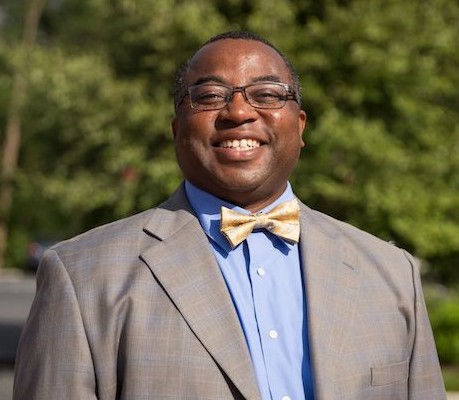
Dr. Todd Allen
Vice President of Diversity Affairs
A Conversation with Vice President of Diversity Affairs Dr. Todd Allen and Associate Professor of Theology Dr. Drew Hart
For 15 years, Messiah University has sent professors, administrators, and students on a journey through the heart of the American South — retracing the steps of one of the most consequential movements in U.S. history. This fall, October 17-24, 2026, the tour is also open to alumni, parents, friends, and community members, including middle school through college-aged children.
We've asked Dr. Allen and Dr. Hart to share — in their own words — what this journey is, why it matters, and what it might mean for you.
Vice President of Diversity Affairs
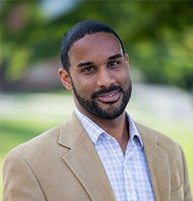
Associate Professor of Theology
Todd Allen: I grew up learning this history at a young age and I assumed that every person in America knew the stories of the Civil Rights Movement. It was in college that I realized that in fact many people were not familiar with this history and what a unique educational experience I had been afforded. Looking back over the past 25 years, I now realize that the education I was receiving was in fact laying the groundwork to prepare me for this work. Never could I have imagined as a younger person that one day I would be blessed to not only meet and befriend many of these historical figures, but that I would have the opportunity to take people from all over the world to many of the key sites of the Movement. I am humbled at the responsibility that this education has afforded me.
Drew Hart: The first time I attended the trip, I was a recent Messiah graduate (‘04) who was passionate about following Jesus, racial justice, and encouraging other believers to participate in God’s healing in society despite the church causing so much historical harm over many centuries. I have attended five times, both participating and leading; however, the first time in particular had the most impact. It put some flesh on stories I had been taught, and provided deeper context for the Movement. Because it was so experiential, it left a permanent imprint on mel; I now carry the stories and experiences of those I met. Meeting so many of the faithful leaders of the Movement, standing in the spaces that they stood, and confronting the difficult decisions they made that took profound faith and courage shapes my own vocation today. And I learned that those kinds of life-changing experiences are really important for our growth and transformation, something that information from a book could never accomplish. (And I love books!)
Todd Allen: Reconciliation is a journey…a lifelong pursuit captured in what Dr. King often called the creation of the beloved community. On this journey to repair and restoration, one must engage in both truth-telling and truth-listening. I often think of the words of the journalist and abolitionist Ida B. Wells when she says “the way to right the wrongs of the past is to shine the light of truth upon them.” Through journeys such as this, we are being immersed in truths of our shared history that many would like to forget or pretend did not occur. The only way to healing is to lean into our painful yet shared history which takes a commitment to seeing one another not as enemies but as persons made in the image of God.
Drew Hart: I love what Dr. Allen said. So I’ll just add a warning that there is a temptation to reduce reconciliation to merely making friends with people from a different background. Dietrich Bonhoeffer famously wrote about cheap grace vs. costly grace in his Lutheran context, while people failed to live in the way of Jesus when it mattered most in Germany. So we might want to improvise with him. We could talk about cheap reconciliation vs. costly reconciliation. Cheap reconciliation does not participate in the way of Jesus, calling for us to love our neighbors (with a special focus on the least, last, lost, and little ones). Cheap reconciliation smothers the truth of our history and skirts around the jubilee and shalom-shaped justice Jesus practices towards the poor, the Samaritan, the outcast, women, the vulnerable, and the sick. Cheap reconciliation wants relationship without transformation; it wants to avoid thinking about the harm rather than healing the wounds; it wants the benefits of resurrection but is unwilling to accept the costly way of the cross to get there. But genuine and costly reconciliation that God has accomplished in Jesus Christ is transfiguring the entire cosmos (2 Cor. 5), it is breaking down the historic walls of hostility between groups so something new in Christ can be built up (Eph. 2), and, in the way of Jesus, costly reconciliation offers deliverance from everything that keeps us in captivity and from experiencing God’s beloved community (Luke 4).
Todd Allen: Every person, regardless of age, encounters the tour with a range of emotions. There will be times of deep sadness, as well as times of deep joy. In regards to young people in particular, one of the things that many people don’t realize is the central role that youth-college aged, high school, junior high, and even elementary school played in the movement. It is said that the Movement was a story of ordinary people who did extraordinary things. We sometimes think it was just older people, but nothing could be further from the truth. My students are surprised to discover that Dr. King was only 26 years old when he led the Montgomery Bus Protest! People who have taken part in these experiences walk away challenged and inspired by the examples and testimony of the men and women, boys and girls, they encounter.
Drew Hart: When I speak across the country, sometimes the more seasoned folks suggest that the world will automatically get better as those who were alive during Jim Crow continue to pass away. I continually make the case that that isn’t how social change happens. Things don’t passively get better as though it were inevitable. The progressive myth is false. Yes, we can have an important role as salt and light in our world, but it will take intentionality as we partner with God. One of the greatest failures that many older generations have practiced is omission. So many people during the Movement not only failed to support racial and economic justice and the general common good of all during those important years, but they have not spoken truthfully about the past and their place in it with younger generations. Everybody, not just young Black and Brown children, needs to know this history if we are to break the spiral of history. And, as Dr. Todd mentioned, young people from all different backgrounds played an important role in the Movement. And young white Christians also need to see the many white people who chose to take a stand for justice, some of them losing their lives in the process. I’ve found that Black and Brown youth grow in confidence in seeing the agency of how their ancestors struggled to make the world better for them. They are role models. We all, including young people, benefit from holding these stories and names with us. It is a lifelong gift. My second time attending included me bringing my younger brother, who was in high school at that time.
Todd Allen: It is no accident that many of the persons who were involved in the movement were people of faith, particularly in the Christian tradition. I have taken several trips alongside Dr. Hart and have always been impressed at the ways in which he articulates the intersection of faith, social justice, and activism looking reflectively at the past while also bringing that message forward to contemporary audiences as they seek to explore ways in which to live out their faith in this present age. Spending time in these sacred spaces, hearing the testimonies of living witnesses of this freedom struggle, and guided by the theological insights of Dr. Hart is a perfect way to engage the meaning of the Movement from a Christian lens.
Drew Hart: In my work, I encourage people to take the work of lament seriously. Grief and guilt are inevitable feelings for someone who is confronting the weight of this history for the first time. Stopping there won’t be good for you or the people who have disproportionately suffered. We must move through it with God. Scripture never avoids suffering. That is a feature of Israel’s story, and just as equally the story of Jesus. The Psalms in particular teach us the importance of lament. It is unfortunate that so few of mainstream contemporary worship songs have learned from the Psalms how important lament is. I wonder how different a nation we might have been if after slavery, or after Jim Crow laws ended, churches practiced a lament that understood the depth of the harm, and in that place of brokenness embraced God’s truth, grace, and healing, so that we could come out on the other side more loving, more attentive to the suffering of others, and more healed, and ultimately more conformed to the image of the Son. The Legacy Museum and the Memorial are powerful. Don’t be afraid to lament.
Todd Allen: While there is power to being in the places and spaces where the Movement occurred, it is magnified when sitting in the presence of these living witnesses to history. I often tell people, you can visit these places anytime they are open for business, but it is the rare opportunity to be with the people who made this history happen. These persons have become family to me over these past 25 years, and everyone who travels along becomes part of the family as well. Sitting in their presence is something one will not soon forget.
Drew Hart: Anthony Ray Hinton is a reminder that what was meant to destroy him did not have the final word as he remained in God’s hand through the storm and through the night. Hopefully his story will also remind us that we in the U.S. have one of the largest prison systems in human history. Our mass incarceration system has always been tied to our racial history. Bondage came first through slavery, then during Jim Crow it was convict leasing, chain gangs, and even peonage, and then after the victories of the Civil Rights movement we saw the prison system explode, targeting poor Black neighborhoods as punishment rather than providing the necessary healing and repair in response to the centuries of blatant oppression. Too many people are suffering, and unfortunately, some are completely innocent. Hopefully our central story about Jesus, who was falsely charged and sentenced, and then given a state-sanctioned execution, will be the ongoing prism for instilling compassion and action for the many other Anthony Ray Hintons out there.
Todd Allen: I’ve long called this experience “Returning to the Roots of Civil Rights” in the sense that as we travel we are “returning” to many of the southern sites of the Movement seeking to understand a time in our recent past. I want people to consider, how are these spaces transformed today? In what ways has progress been made? In what ways has it remained illusive and what can be done to address this? Simultaneously, I want people to think about the places that they came from to take this journey, especially if they are from the North because sometimes we don’t see that this region of the country was impacted by the Movement — though it was. I want people to ask, what was going on where I’m from during the 1950s-60s? What’s going on now? How has this region of the country been changed? What are the issues that remain and what role can I play in being a change-agent in this process? Ultimately, coming home from an experience like this I want people to spend their remaining days wrestling with what it means to be a faithful presence for God in the spaces that they occupy, professionally and personally.
Drew Hart: Christian formation should shape our head, heart, and hands. Unfortunately, as western Christianity grew and developed, it got obsessed with the head (information) that distorted the simple call to follow Jesus (as actually described in Matthew, Mark, Luke and John), and made heart into personal emotions to songs we sing without inner regeneration leading to outwards lives that look like Jesus, and hands got consumed with building our institutions over participating in God’s kingdom. This trip is a helpful realignment into how God has used ordinary people to participate in divine deliverance, healing, and peacemaking in our world. So if your heart is troubled by everything going on in our world, this trip is for you. If you desire for your heart to break along with the things that break God’s heart, this trip is for you. If you desire a distinctly Christian group to pilgrimage with, so you can grow in your love for God, love for your neighbor in response to our nation’s original and ongoing sins, this trip is for you. I hope you sign up before spots fill up; I’ll look forward to seeing you on the bus.